

We are a Merchant Exporter supplying Chemicals, Pharmaceuticals, Agriculture, Textile products world wide. We have so many products available in Chemicals like Laboratory Chemicals, High purity Solvents, Food Grade Pharmaceuticals, Safety & Hygie...
- (+91) 9998943150
- info@swastiexports.com
- B/84, Shrinivas Tenaments, Behind Makarpura Bus Depot,, , Vadodara, Gujarat, India. 390010
© 2020 Swasti Exports. All Rights Reserved
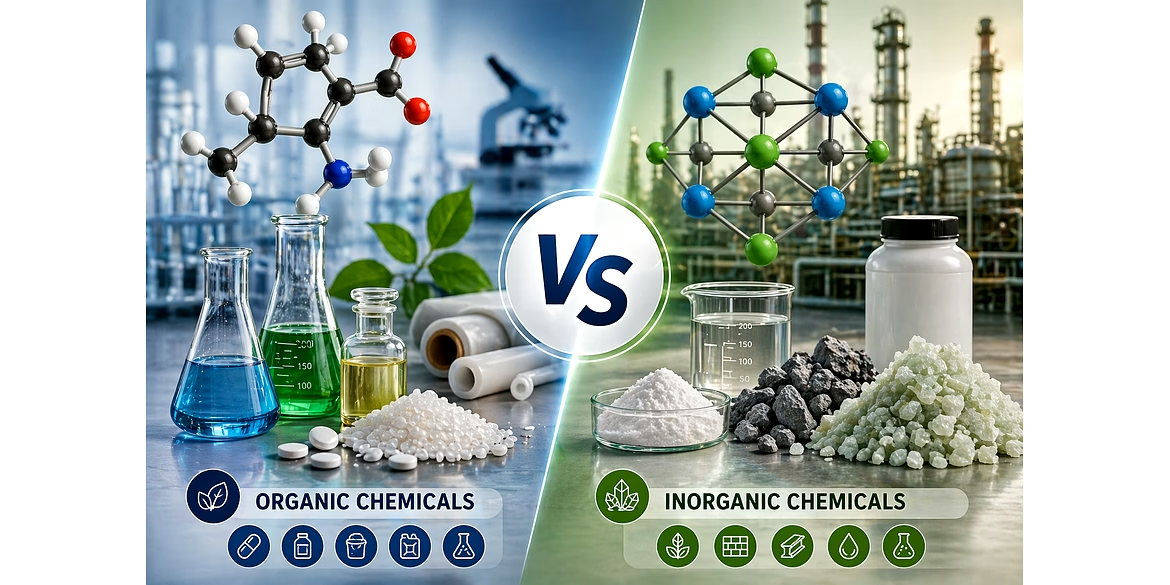

Understanding Organic and Inorganic Chemicals in Industry
Organic and inorganic chemicals are fundamental to modern industrial processes, forming the backbone of manufacturing, pharmaceuticals, agriculture, and material science. Understanding the differences between organic and inorganic chemicals helps businesses select the right chemical solutions for specific industrial applications.
While organic chemicals are primarily carbon-based compounds, inorganic chemicals consist of minerals and non-carbon elements. Both play equally important roles in industrial production and global supply chains, contributing to efficiency, performance, and scalability. Businesses can explore industrial chemical supply solutions to ensure consistent sourcing.
• Essential for manufacturing, processing, and formulation
• Widely used across multiple industries
• Key to improving efficiency and product performance
What are Organic Chemicals – Carbon-Based Industrial Compounds
Organic chemicals are compounds that contain carbon atoms, often combined with hydrogen, oxygen, or other elements. These chemicals are widely used in industries due to their versatility and ability to form complex molecular structures.
Organic industrial chemicals are essential in manufacturing sectors such as plastics, pharmaceuticals, fuels, and synthetic materials. Their adaptability makes them highly valuable for product formulation and innovation in modern industries.
• Carbon-based compounds with complex structures
• Used in polymers, resins, and synthetic materials
• Common examples include acetic acid, ethanol, and methanol
• Widely used in pharmaceuticals, textiles, and coatings
What are Inorganic Chemicals – Mineral-Based Industrial Substances
Inorganic chemicals are compounds that generally do not contain carbon-hydrogen bonds. These chemicals are derived from minerals and are known for their stability and effectiveness in industrial processes.
Inorganic industrial chemicals are widely used in construction, metallurgy, fertilizers, and chemical processing industries. Their durability and reactivity make them ideal for heavy-duty industrial applications and large-scale production.
• Non-carbon-based or mineral-based compounds
• Used in fertilizers, acids, and industrial processing
• Examples include sulphuric acid, calcium hydroxide, and ammonia
• Essential for heavy industries and chemical reactions
Key Differences Between Organic and Inorganic Chemicals
Understanding the difference between organic and inorganic chemicals is essential for selecting the right materials for industrial applications. Each type has unique properties, uses, and advantages that impact manufacturing efficiency and product quality.
• Organic chemicals are carbon-based, while inorganic chemicals are mineral-based
• Organic compounds have more complex structures
• Inorganic chemicals are more stable under extreme conditions
• Organic chemicals are used in pharmaceuticals, while inorganic are used in construction and heavy industries
Applications of Organic Chemicals in Industry
Organic chemicals are widely used across industries due to their versatility and ability to form complex compounds. They are essential for modern manufacturing and product development.
• Used in pharmaceutical manufacturing and drug development
• Production of plastics, polymers, and synthetic fibers
• Application in paints, coatings, and adhesives
• Essential for fuels, solvents, and chemical synthesis
Applications of Inorganic Chemicals in Industry
Inorganic chemicals play a critical role in industrial and large-scale production processes. Their stability and reactivity make them ideal for heavy-duty applications in manufacturing and processing industries.
• Used in fertilizers and agricultural products
• Essential for construction materials and cement production
• Application in metallurgy and metal processing
• Used in water treatment and industrial cleaning
Choosing the Right Chemical for Your Industrial Needs
Selecting between organic and inorganic chemicals depends on the application, industry requirements, and desired outcomes. Businesses must evaluate performance, cost, and safety when choosing chemical solutions.
• Consider the application and end-use requirements
• Evaluate chemical stability and performance
• Ensure compliance with safety and regulatory standards
• Source from reliable and certified suppliers
Conclusion – Importance of Organic and Inorganic Chemicals in Manufacturing
Both organic and inorganic chemicals are essential for industrial growth and innovation. Their unique properties make them suitable for different applications, and understanding their differences helps businesses optimize production processes and improve efficiency.
• Both types are critical for industrial operations
• Selection depends on specific use cases and requirements
• Reliable sourcing ensures quality and efficiency
Frequently Asked Questions – Organic vs Inorganic Chemicals
What is the main difference between organic and inorganic chemicals?
Organic chemicals are carbon-based, while inorganic chemicals are mineral-based and do not contain carbon-hydrogen bonds.
Where are organic chemicals commonly used?
They are used in pharmaceuticals, plastics, textiles, fuels, and coatings due to their versatility.
What are inorganic chemicals used for?
They are used in construction, agriculture, metallurgy, and water treatment industries.
Which industries use both types?
Manufacturing, pharmaceuticals, agriculture, and construction industries use both types.
Are organic chemicals more complex?
Yes, they generally have more complex molecular structures than inorganic chemicals.
How do businesses choose between them?
They evaluate application, performance, cost, and regulatory compliance.