

We are a Merchant Exporter supplying Chemicals, Pharmaceuticals, Agriculture, Textile products world wide. We have so many products available in Chemicals like Laboratory Chemicals, High purity Solvents, Food Grade Pharmaceuticals, Safety & Hygie...
- (+91) 9998943150
- info@swastiexports.com
- B/84, Shrinivas Tenaments, Behind Makarpura Bus Depot,, , Vadodara, Gujarat, India. 390010
© 2020 Swasti Exports. All Rights Reserved
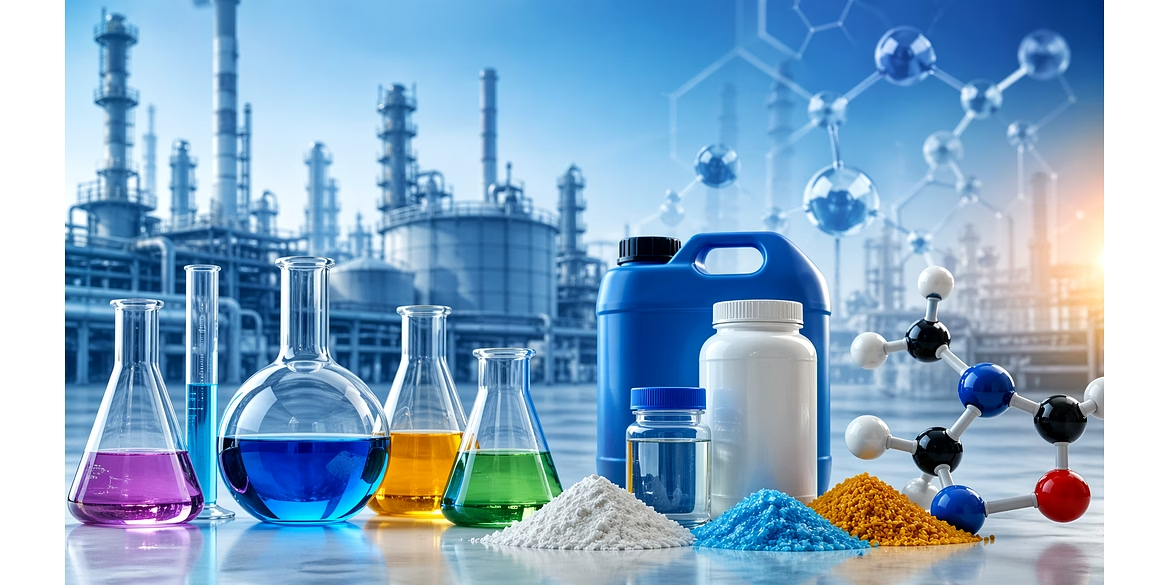

Introduction – Understanding Industrial Chemicals in Modern Manufacturing
Industrial chemicals play a critical role in modern manufacturing processes across multiple industries. From production and processing to finishing and preservation, these chemicals are essential for improving efficiency, enhancing product quality, and enabling large-scale industrial operations. Businesses across sectors depend on industrial chemicals in manufacturing to maintain process consistency, optimize output, and support reliable product development.
Manufacturers rely on a wide range of industrial chemicals to support processes such as cleaning, synthesis, coating, and material transformation. Understanding the different types of industrial chemicals and their applications in manufacturing helps businesses choose the right materials for their operations while improving compliance, safety, and performance. Companies exploring reliable sourcing can also review industrial chemical supply solutions and quality assurance standards to strengthen procurement decisions.
• Essential for large-scale manufacturing and processing
• Improve product quality and production efficiency
• Used across industries like textiles, pharmaceuticals, construction, and food processing
Organic Chemicals – Key Components in Industrial Production
Organic chemicals are carbon-based compounds widely used in manufacturing industries. These chemicals are essential for producing plastics, solvents, pharmaceuticals, and synthetic materials. Their adaptability makes them highly valuable in industrial production where molecular complexity and functional performance are important.
Organic industrial chemicals are commonly used due to their versatility and ability to form complex molecular structures required for industrial applications. They are especially important in the production of intermediates for coatings, adhesives, resins, and textile processing, making them a core part of industrial chemical applications in manufacturing.
• Used in the production of plastics, resins, and polymers
• Essential for pharmaceutical and chemical synthesis
• Common examples include acetic acid, methanol, and ethanol
• Widely used in coatings, adhesives, and textiles
Inorganic Chemicals – Essential Raw Materials for Industry
Inorganic chemicals are non-carbon-based substances that play a vital role in industrial manufacturing. They are widely used for their stability, reactivity, and ability to function in harsh industrial environments. These properties make inorganic industrial chemicals suitable for demanding applications across heavy industries.
These chemicals are commonly used in construction, metallurgy, and chemical processing industries. Their use in water treatment, pH regulation, and process control highlights their importance in manufacturing operations where durability and reaction efficiency are required. Businesses can also connect these needs with broader global sourcing and supply solutions for dependable industrial raw materials.
• Used in fertilizers, construction materials, and water treatment
• Examples include calcium hydroxide, sulphuric acid, and ammonia
• Important for pH control and chemical reactions
• Widely used in heavy industries and processing plants
Industrial Solvents – Critical for Processing and Formulation
Industrial solvents are chemicals used to dissolve, extract, or suspend other substances during manufacturing processes. They are widely used in industries such as paints, coatings, pharmaceuticals, and printing. Their role in formulation and cleaning makes them indispensable in modern manufacturing systems.
Solvents play a crucial role in ensuring proper formulation and processing of products. By helping remove impurities, improve consistency, and support blending, industrial solvents contribute directly to product quality and operational efficiency. This makes them one of the most important categories when evaluating types of industrial chemicals used in manufacturing.
• Used in paints, coatings, and cleaning processes
• Common solvents include acetone, methylene chloride, and DMF
• Essential for pharmaceutical and chemical processing
• Help in removing impurities and improving product consistency
Acids and Bases – Driving Chemical Reactions in Manufacturing
Acids and bases are fundamental to many industrial processes, including chemical synthesis, cleaning, and pH control. These chemicals are widely used across industries for their reactive properties. In manufacturing environments, they help maintain process balance and support critical production stages.
They enable essential reactions and help maintain process stability in manufacturing environments. From metal treatment to fertilizer production, acids and bases remain central to industrial efficiency. Companies looking for dependable operational support may also explore export logistics and documentation for smoother industrial procurement and delivery.
• Used in chemical manufacturing and metal processing
• Examples include sulphuric acid, hydrochloric acid, and sodium hydroxide
• Important for pH adjustment and industrial cleaning
• Widely used in fertilizer and petroleum industries
Specialty Chemicals – Customized Solutions for Advanced Applications
Specialty chemicals are designed for specific industrial applications and provide unique performance characteristics. These chemicals are used in advanced manufacturing processes where precision and performance are critical. Their purpose-driven design helps manufacturers achieve targeted outcomes in highly specialized operations.
They are commonly used in industries such as electronics, pharmaceuticals, and high-performance materials. Specialty chemicals support innovation by addressing niche technical requirements in production, formulation, and finishing. For businesses seeking industry-specific support, custom sourcing solutions can be highly relevant.
• Used in coatings, adhesives, and advanced materials
• Tailored for specific industrial applications
• High-performance chemicals for specialized processes
• Support innovation in manufacturing industries
Applications of Industrial Chemicals Across Industries
Industrial chemicals are used across a wide range of industries, supporting various manufacturing and processing activities. Their versatility makes them essential for modern industrial operations. From raw material transformation to surface finishing and preservation, industrial chemical applications are deeply integrated into daily production systems.
Understanding how industrial chemicals serve different industries helps businesses identify the right sourcing strategy, application method, and compliance requirements. This broad utility also shows why reliable supply, documentation, and quality control are so important in industrial procurement.
• Textile industry for dyeing and processing
• Pharmaceutical industry for drug manufacturing
• Construction industry for materials and coatings
• Food processing industry for preservation and production
• Metallurgy for metal processing and treatment
Conclusion – Choosing the Right Industrial Chemicals for Manufacturing
Selecting the right industrial chemicals is crucial for ensuring efficiency, safety, and product quality in manufacturing processes. Businesses must consider factors such as application, quality standards, and supplier reliability when sourcing chemicals. A strategic approach to procurement supports smoother production, lower risk, and better long-term performance.
Partnering with a reliable supplier ensures consistent quality, compliance with regulations, and efficient supply chain management. Whether a business needs organic chemicals, industrial solvents, specialty chemicals, or inorganic compounds, choosing a dependable partner can make a significant difference in manufacturing success. Related resources such as why choose Swasti Exports and global supply partner solutions can also provide useful context for buyers.
• Importance of choosing high-quality chemical suppliers
• Ensuring compliance with safety and regulatory standards
• Optimizing manufacturing efficiency with the right chemicals
Frequently Asked Questions – Industrial Chemicals in Manufacturing
What are industrial chemicals used for in manufacturing?
Industrial chemicals are used in various manufacturing processes such as production, cleaning, coating, and chemical reactions to improve efficiency and product quality.
• Used in production and processing
• Enhance product performance
• Support large-scale manufacturing
What are the main types of industrial chemicals?
The main types include organic chemicals, inorganic chemicals, solvents, acids, bases, and specialty chemicals, each serving different industrial purposes.
• Organic and inorganic chemicals
• Solvents and acids
• Specialty chemicals
How are solvents used in industrial applications?
Solvents are used to dissolve or extract substances during manufacturing processes, especially in paints, coatings, and pharmaceuticals.
• Used in cleaning and formulation
• Help in processing and extraction
• Improve product consistency
Why are acids and bases important in manufacturing?
Acids and bases are essential for chemical reactions, pH control, and cleaning processes in various industries.
• Enable chemical synthesis
• Used in cleaning and processing
• Maintain process stability
What industries use industrial chemicals the most?
Industries such as pharmaceuticals, textiles, construction, food processing, and metallurgy heavily rely on industrial chemicals.
• Pharmaceutical and biotech industries
• Textile and dye manufacturing
• Construction and metallurgy
How can businesses ensure the quality of industrial chemicals?
Businesses should source chemicals from verified suppliers, ensure compliance with standards, and check documentation like COA and MSDS.
• Supplier verification
• Quality control checks
• Compliance with regulations
How to choose the right industrial chemical supplier?
A reliable supplier should offer consistent quality, proper documentation, competitive pricing, and efficient logistics support.
• Strong supplier network
• Quality assurance and compliance
• Reliable delivery and bulk supply