

We are a Merchant Exporter supplying Chemicals, Pharmaceuticals, Agriculture, Textile products world wide. We have so many products available in Chemicals like Laboratory Chemicals, High purity Solvents, Food Grade Pharmaceuticals, Safety & Hygie...
- (+91) 9998943150
- info@swastiexports.com
- B/84, Shrinivas Tenaments, Behind Makarpura Bus Depot,, , Vadodara, Gujarat, India. 390010
© 2020 Swasti Exports. All Rights Reserved
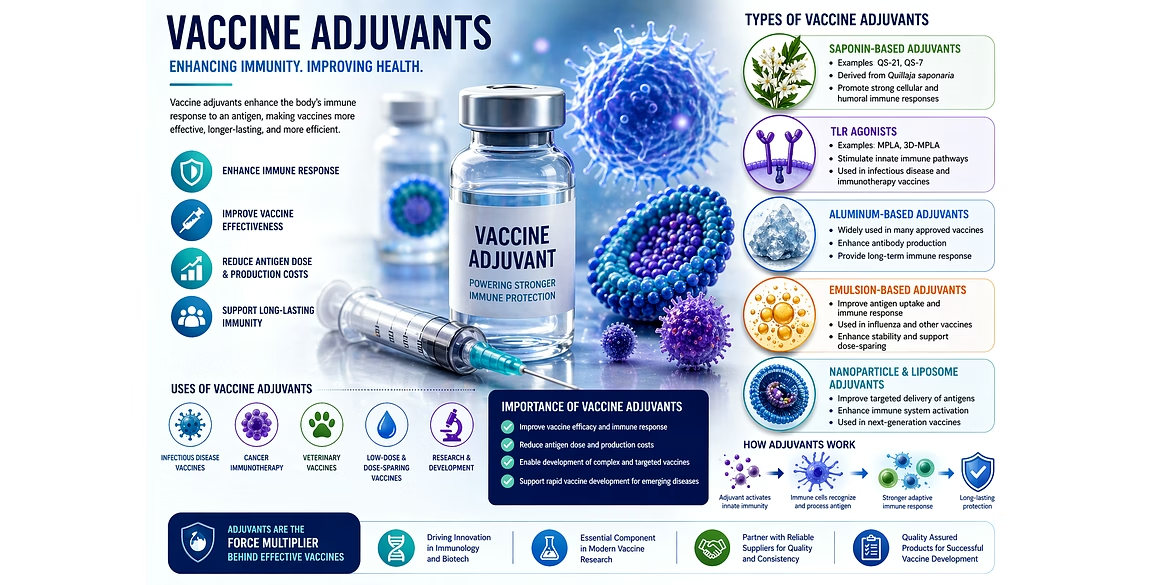

Understanding the Role of Vaccine Adjuvants
Vaccine adjuvants are essential components used in modern vaccines to enhance the body’s immune response to an antigen. They play a critical role in improving vaccine effectiveness, reducing the required antigen dose, and enabling long-lasting immunity. In modern biotechnology and pharmaceutical research, vaccine adjuvants have become increasingly important for developing efficient and targeted immunization strategies.
With advancements in biotechnology and immunology, adjuvants have become a key focus in vaccine development for infectious diseases, cancer, and immunotherapy. Their role in improving immune activation and supporting next-generation vaccine platforms makes them highly valuable for research institutions, biotech companies, and pharmaceutical manufacturers. You may also connect this topic with life sciences and biotech products and quality assurance standards for related internal resources.
• Enhance immune response to vaccines
• Improve vaccine efficiency and effectiveness
• Enable long-lasting immunity
• Widely used in human and veterinary vaccines
What are Vaccine Adjuvants – Definition and Function
Vaccine adjuvants are substances added to vaccines to stimulate a stronger immune response. They work by activating the immune system and helping the body recognize and respond more effectively to the vaccine antigen. This enhanced immune recognition supports better protection and can improve the overall performance of vaccine formulations.
Adjuvants can influence how the immune system reacts, making vaccines more potent and efficient. By supporting both innate and adaptive immunity, vaccine adjuvants help researchers and manufacturers design formulations that are more effective, stable, and suitable for complex medical applications.
• Stimulate and enhance immune system response
• Reduce the amount of antigen required in vaccines
• Improve vaccine stability and performance
• Support both innate and adaptive immunity
Types of Vaccine Adjuvants – Classification and Examples
Vaccine adjuvants are classified based on their composition and mechanism of action. Each type is designed to target specific immune pathways and applications. Understanding the main types of vaccine adjuvants helps pharmaceutical and biotech professionals choose the most suitable system for research, formulation, and product development.
Saponin-Based Adjuvants – Potent Immune Enhancers
Saponins are natural compounds derived from plant sources and are widely used in advanced vaccine formulations. They are known for their strong ability to stimulate immune responses and support both cellular and humoral immunity, making them highly valuable in modern immunology and vaccine research.
Saponin-based adjuvants are especially important in cancer vaccines, immunotherapy research, and next-generation vaccine systems. Their ability to generate potent immune activity has made them a preferred choice for advanced applications in the biotech and pharmaceutical sectors.
• Examples include QS-21, QS-7, and other saponin derivatives
• Derived from Quillaja saponaria
• Used in cancer vaccines and advanced immunotherapies
• Promote strong cellular and humoral immune responses
TLR Agonists (Toll-Like Receptor Agonists) – Targeted Immune Activation
TLR agonists activate specific receptors in the immune system, triggering a targeted immune response. These adjuvants are widely used in modern vaccine research because they help direct immune activation in a more controlled and efficient way.
TLR agonist adjuvants are important in vaccines for infectious diseases and immunotherapy applications where precision and performance are critical. Their ability to stimulate innate immune pathways makes them central to advanced vaccine technology and immunological innovation.
• Examples include MPLA and 3D-MPLA
• Stimulate innate immune system pathways
• Used in infectious disease and immunotherapy vaccines
• Improve vaccine precision and effectiveness
Aluminum-Based Adjuvants – Traditional and Widely Used
Aluminum salts are among the oldest and most commonly used adjuvants in vaccines. They are well known for their safety profile, effectiveness, and long history of use in approved vaccine formulations around the world.
Aluminum-based adjuvants remain important in global vaccine programs because they enhance antibody production and help generate long-term immune responses. Their proven performance continues to make them a dependable choice in many traditional and commercial vaccines.
• Commonly used in many approved vaccines
• Enhance antibody production
• Provide long-term immune response
• Widely accepted in global vaccine programs
Emulsion-Based Adjuvants – Enhanced Delivery Systems
Emulsion adjuvants use oil-in-water mixtures to improve antigen delivery and immune activation. They are commonly used in influenza and other vaccine platforms where enhanced uptake and stronger immunogenicity are desired.
These vaccine adjuvants support dose-sparing strategies, stability, and efficient immune stimulation. Their functionality makes them useful in seasonal, pandemic, and research-driven vaccine development programs.
• Improve antigen uptake and immune response
• Used in pandemic and seasonal vaccines
• Enhance vaccine stability and performance
• Support dose-sparing strategies
Nanoparticle and Liposome Adjuvants – Advanced Delivery Technologies
These modern adjuvant systems use nanoparticles or liposomes to deliver antigens more efficiently. They represent the future of vaccine technology by improving targeted delivery, immune activation, and formulation precision.
Nanoparticle and liposome adjuvants are especially relevant for next-generation vaccines, precision medicine, and immunotherapy. Their advanced delivery capabilities make them a key area of interest in biotechnology innovation and pharmaceutical development.
• Improve targeted delivery of antigens
• Enhance immune system activation
• Used in next-generation vaccines
• Support precision medicine and immunotherapy
Uses of Vaccine Adjuvants – Applications in Modern Medicine
Vaccine adjuvants are widely used across various medical and research applications. Their ability to enhance immune responses makes them essential for both traditional and advanced vaccines. From infectious disease control to cancer immunotherapy and veterinary research, adjuvants continue to support critical medical progress.
• Used in vaccines for infectious diseases
• Applied in cancer immunotherapy research
• Support development of veterinary vaccines
• Enable effective low-dose vaccine formulations
Importance of Vaccine Adjuvants – Driving Innovation in Healthcare
Adjuvants are critical for advancing vaccine technology and improving global health outcomes. They allow scientists to develop more effective vaccines with better safety and performance profiles while also helping reduce antigen usage and production costs.
The importance of vaccine adjuvants extends beyond performance. They support rapid vaccine development for emerging diseases and enable the design of complex, targeted, and modern immunization strategies in both human and veterinary medicine.
• Improve vaccine efficacy and immune response
• Reduce antigen dose and production costs
• Enable development of complex and targeted vaccines
• Support rapid vaccine development for emerging diseases
Conclusion – The Future of Vaccine Adjuvants in Biotech
Vaccine adjuvants continue to play a vital role in modern biotechnology and pharmaceutical research. With ongoing advancements, they are expected to drive innovation in vaccine development, immunotherapy, and precision medicine. Their contribution to immune enhancement, formulation efficiency, and next-generation medical solutions will remain highly significant.
For research institutions and pharmaceutical companies, access to high-quality adjuvant molecules and systems is essential for successful product development. Businesses looking for dependable sourcing may also review specialized biotech products and global supply solutions for related support.
• Critical component in modern vaccine research
• Driving innovation in immunology and biotech
• Importance of sourcing from reliable suppliers
Frequently Asked Questions – Vaccine Adjuvants
What are vaccine adjuvants used for?
Vaccine adjuvants are used to enhance the immune response to a vaccine, making it more effective and long-lasting.
• Improve immune system activation
• Increase vaccine effectiveness
• Reduce required antigen dose
What are the main types of vaccine adjuvants?
The main types include saponin-based adjuvants, TLR agonists, aluminum salts, emulsions, and nanoparticle-based systems.
• Saponins (QS-21, QS-7)
• TLR agonists (MPLA)
• Aluminum-based adjuvants
• Liposome and nanoparticle systems
How do adjuvants improve vaccine effectiveness?
Adjuvants stimulate the immune system, helping it recognize and respond more strongly to the vaccine antigen.
• Activate immune pathways
• Enhance antigen recognition
• Improve immune memory
Are vaccine adjuvants safe?
Yes, approved adjuvants are tested extensively for safety and are used in many vaccines worldwide.
• Used in approved vaccines
• Tested for safety and efficacy
• Regulated by health authorities
What is QS-21 adjuvant?
QS-21 is a saponin-based adjuvant derived from plant sources and is widely used in advanced vaccine research and immunotherapy.
• Derived from Quillaja saponaria
• Used in cancer and advanced vaccines
• Strong immune response enhancer
What is MPLA and how is it used?
MPLA (Monophosphoryl Lipid A) is a TLR4 agonist used to stimulate the immune system in vaccine formulations.
• Activates immune receptors
• Used in modern vaccines
• Enhances immune response
Why are adjuvants important in modern vaccines?
Adjuvants are important because they improve vaccine performance, reduce costs, and enable the development of advanced and targeted vaccines.
• Increase vaccine efficiency
• Support innovation in biotech
• Enable development of new vaccines